



Cloud-native GIS is not about moving legacy desktop workflows to a virtual machine. It is about re-architecting spatial systems to treat object storage as the primary source of truth.
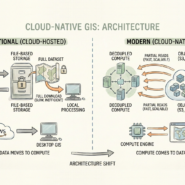
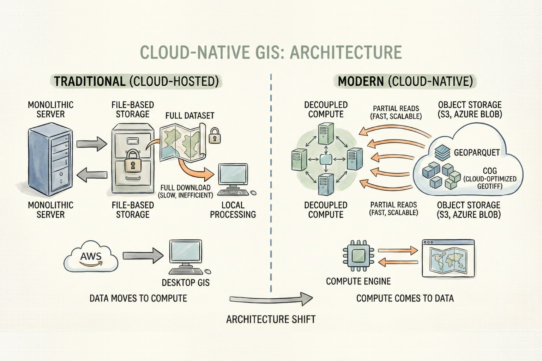
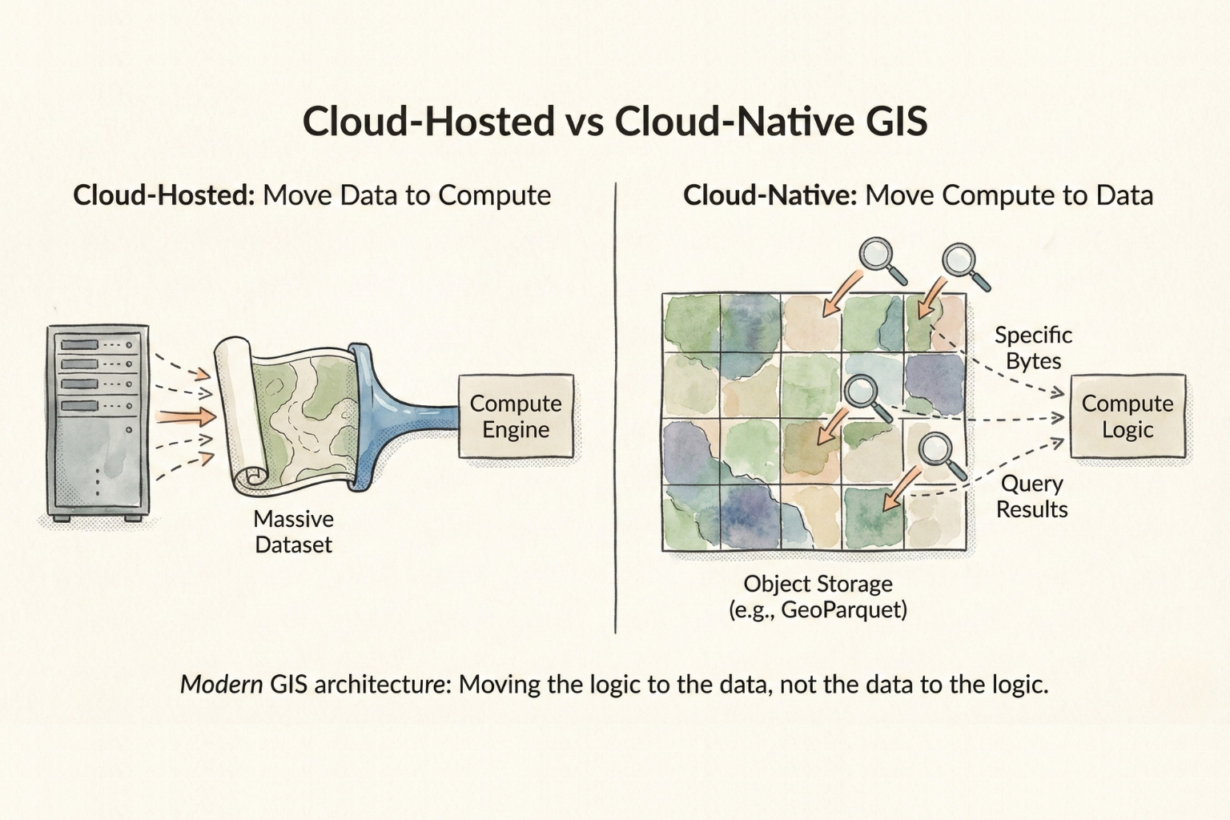
The fundamental distinction lies in decoupling compute from storage. Traditional GIS relies on monolithic, stateful servers and file-locking mechanisms that require moving massive datasets to the compute engine.
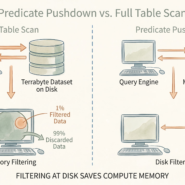
In a cloud-native architecture, compute happens where the data lives. Cloud-Optimized GeoTIFFs and GeoParquet enable partial reads via HTTP range requests. Instead of downloading a 10GB raster to clip a small study area, the system fetches only the specific byte ranges required.
This changes everything. Parallel access becomes natural. Users read the same data simultaneously without locks or replication. Scaling means better infrastructure, not moving more data.
Cloud-native GIS makes sense when your spatial analytics involve massive datasets, multi-user collaboration, or automated scaling. It is less critical for small-scale, bespoke cartography where a local GeoPackage suffices. If you are modernizing, start with your storage layer. Converting static archives to GeoParquet provides immediate wins in query speed and interoperability without requiring a full platform overhaul.
The rule: Modern GIS is built for reading less, not moving more. By leveraging object storage and partitioned formats, you reduce egress costs and eliminate the “compute-idle” tax—paying only for the seconds it takes to query data, rather than the hours a server sits waiting for files to transfer.
Spatial Lab – My private community where GIS professionals, data engineers, and analysts connect, swap workflows, and build repeatable systems together.
Modern GIS Accelerator – A guided program to help you break out of legacy GIS habits and learn modern, scalable workflows.
Career Compass – A career-focused program designed to help GIS pros navigate the job market, sharpen their pitch, and find roles beyond traditional GIS paths.
Sponsorship: Interested in sponsoring this newsletter (or other content)? Learn more here and fill out the form to get in touch!