


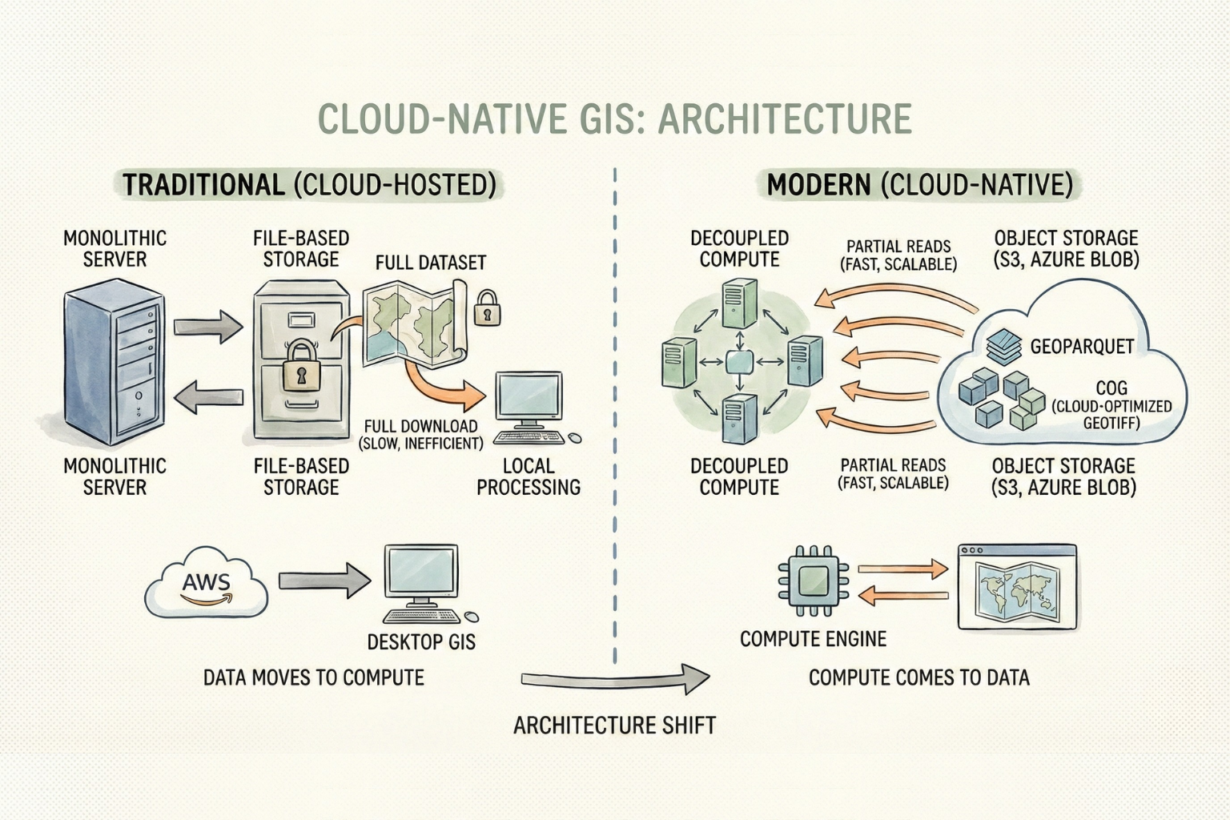

Cloud-native GIS isn’t about hosting your servers in AWS. It’s a fundamental shift to designing spatial systems where data is stored, accessed, and processed efficiently via object storage.
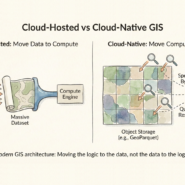
The distinction between “cloud-hosted” and “cloud-native” lies in architecture. Traditional GIS relies on monolithic servers and file locking. You copy massive datasets to local disk for processing. Cloud-native architecture decouples compute from storage. It uses formats like
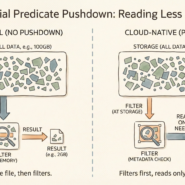
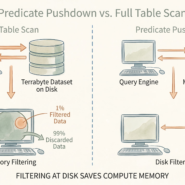
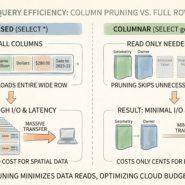
GeoParquet and Cloud-Optimized GeoTIFFs designed for HTTP range requests. Engines perform partial reads—fetching only the specific bytes needed for a query, not the whole file. This enables scalable spatial analytics and parallel access patterns impossible with legacy file-based systems.
Adopt cloud-native patterns when data pipelines are throttled by egress costs or when you need to automate analysis across petabytes. It’s the standard for modern workflows where multiple tools access the same source of truth without duplication. If your work is limited to small, static datasets on a single desktop, refactoring overhead outweighs benefits. Start by converting large raster catalogs to COGs for immediate performance gains.
The rule: If you’re moving data to compute, you’re hosting. If you’re bringing compute to data, you’re native.
Adopting a decoupled storage architecture reduces cloud infrastructure costs by 30-50% by eliminating persistent, high-memory servers just to host static data. That’s not efficiency theater—that’s real money.
Whenever you’re ready, here are 4 ways I can help you grow in GIS & spatial data:
Spatial Lab – My private community where GIS professionals, data engineers, and analysts connect, swap workflows, and build repeatable systems together.
Modern GIS Accelerator – A guided program to help you break out of legacy GIS habits and learn modern, scalable workflows.
Career Compass – A career-focused program designed to help GIS pros navigate the job market, sharpen their pitch, and find roles beyond traditional GIS paths.
Sponsorship: Interested in sponsoring this newsletter (or other content)? Learn more here and fill out the form to get in touch!