


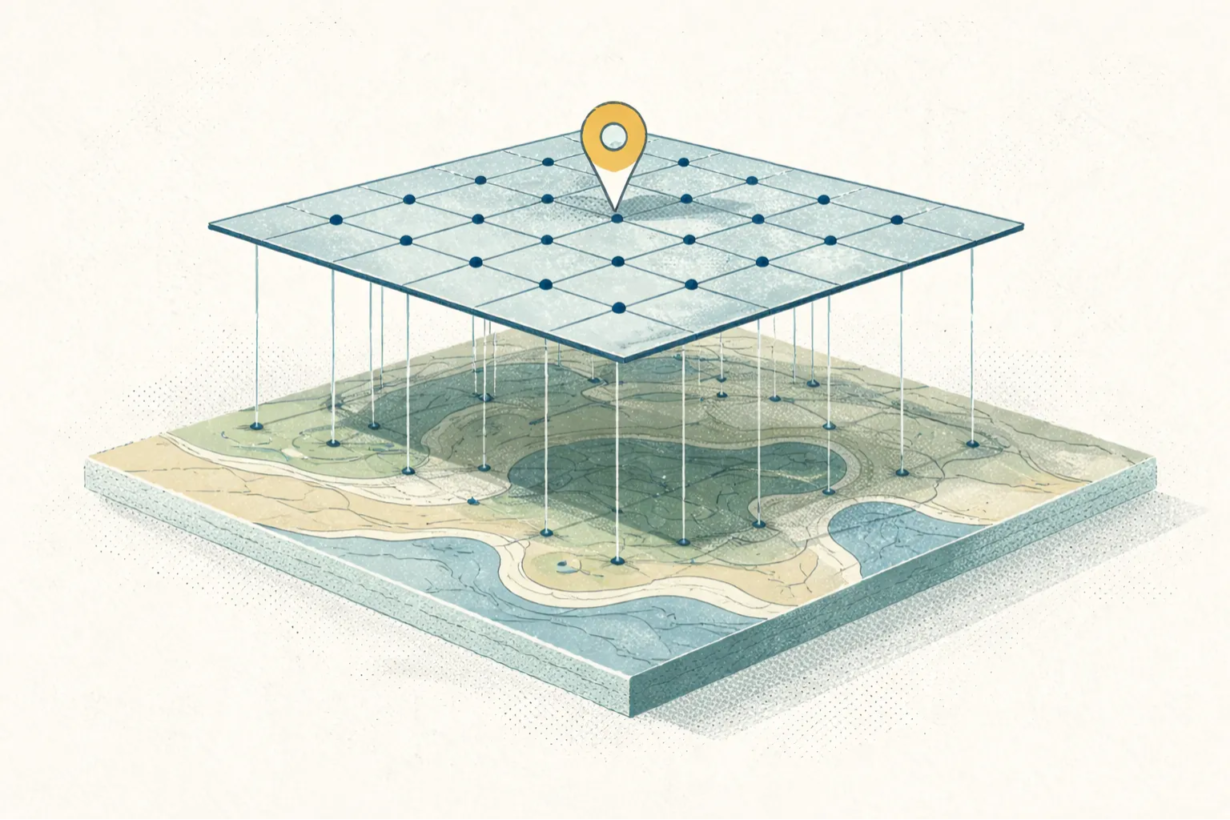

Most GIS measurement failures happen because people confuse what a CRS actually is and what it isn’t.
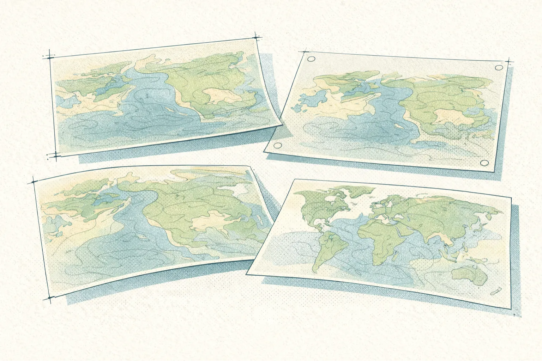
A CRS (Coordinate Reference System) does one thing: it defines how a pair of coordinates maps to the real world. Without it, you have nothing. 47.6, -122.3 could mean anything. With EPSG:4326 (WGS84), it means a location in Seattle. With EPSG:2285 (State Plane Washington North), it means the same location but expressed differently. The CRS is the translation layer.
Here’s what a CRS controls: distance, area, direction, and scale. Change the CRS, and those measurements change. This is why EPSG:4326 breaks analysis. It’s a geographic CRS coordinates in degrees, not meters. When you calculate distance using EPSG:4326 coordinates, you’re not measuring actual distance. You’re measuring angular displacement. Your buffer is wrong. Your area calculation is nonsense.
Many people think reprojection and defining a CRS are the same thing. They’re not. Defining a CRS says “these coordinates use this reference system.” Reprojecting says “translate these coordinates into a different reference system.” If your data is missing a CRS definition entirely, you have to define it first (rarely reproject without defining).
The sanity check: Before any measurement (distance, area, buffer, density), check your CRS. If it’s geographic (degrees), stop.
Reproject to a projected CRS appropriate for your region (UTM, State Plane, local projected). Then measure.
If you see impossibly large distances or wildly inaccurate areas, wrong CRS is your first suspect. Check it before you suspect the data, the algorithm, or your code.
Whenever you’re ready, here are 4 ways I can help you grow in GIS & spatial data:
Spatial Lab – My private community where GIS professionals, data engineers, and analysts connect, swap workflows, and build repeatable systems together.
Modern GIS Accelerator – A guided program to help you break out of legacy GIS habits and learn modern, scalable workflows.
Career Compass – A career-focused program designed to help GIS pros navigate the job market, sharpen their pitch, and find roles beyond traditional GIS paths.
Sponsorship: Interested in sponsoring this newsletter (or other content)? Learn more here and fill out the form to get in touch!